Monday, 22 September 2014

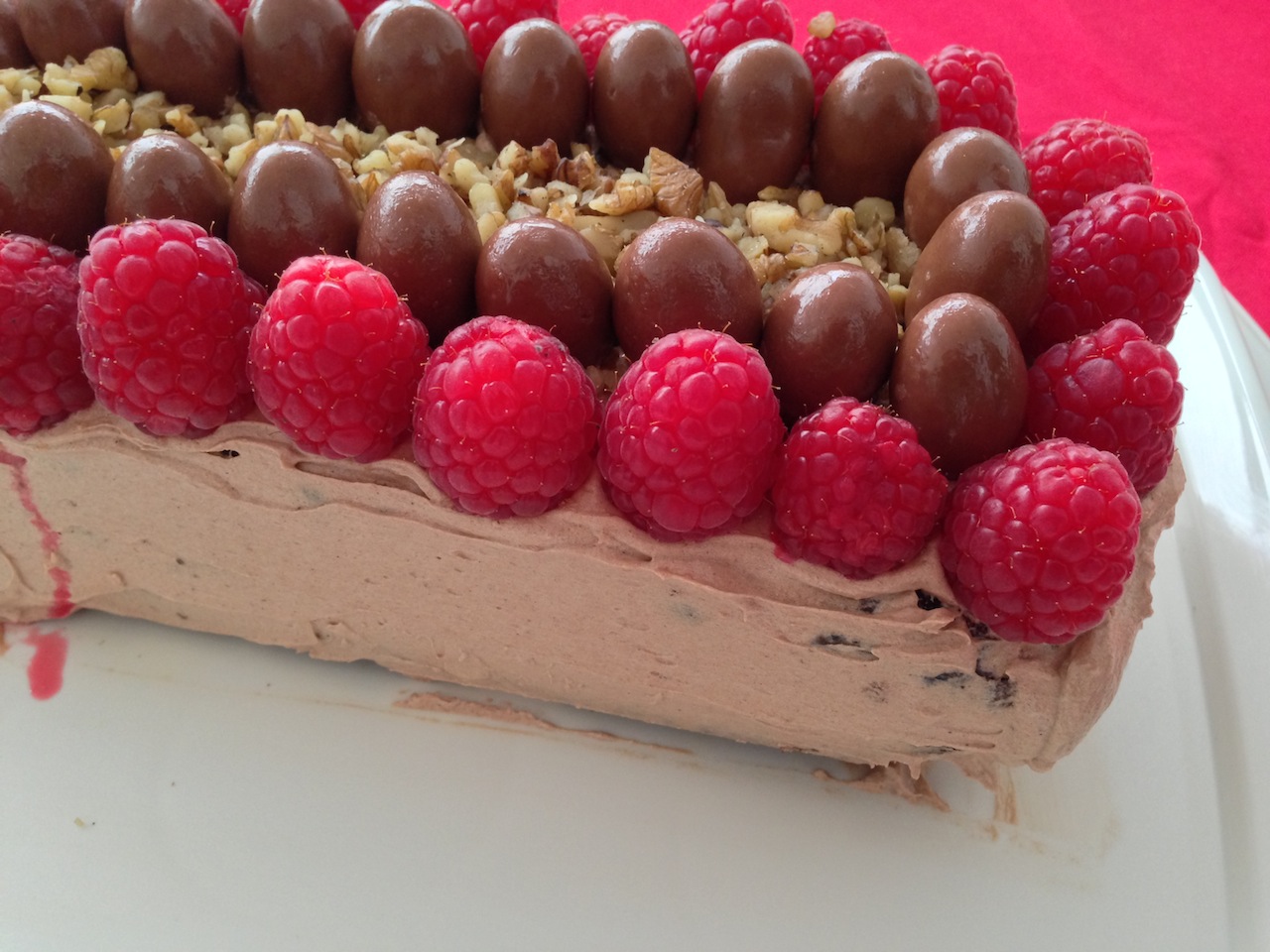
Gluten Free Birthday Cake Birthday Cake Images For Girls Clip Art Pictures Pics With Name Ideas With Candles Love Designs

Gluten Free Birthday Cake Biography

Source:- Google.com.pk
A Swiss roll , jelly roll, or cream roll is a type of sponge cake roll. A thin cake layer is made of flour, eggs, and sugar and baked in a very shallow rectangular baking tray, called a sheet pan. The cake is removed from the pan and spread with jam or buttercream, rolled up, and served in round cross-sectional slices.The origins of the term "Swiss roll" are unclear. The cake originated in Central Europe, but not in Switzerland as the name would suggest. It appears to have been invented in the nineteenth century, along with Battenberg, doughnuts and Victoria sponge.The shape of the Swiss roll has inspired usage as a descriptive term in other fields, such as in optics and blues music.The earliest published reference for a rolled cake spread with jelly was in the Northern Farmer, a journal published in Utica, New York, in December 1852. The recipe was called “To Make Jelly Cake” but it reads: “Bake quick and while hot spread with jelly. Roll carefully, and wrap it in a cloth. When cold cut in slices for the table.” The description is for a Jelly Roll. The name Jelly Cake comes from another cake recipe that was made up of 5 to 6 thin layers of cake with jelly between each layer. It made a thick, high cake. Jelly Cake (layer cake) is an old English recipe.
In America for many years, there was no clear distinction between the name "Jelly Cake" and "Jelly Roll" to describe a rolled cake spread with jelly. During the period from 1852 to 1877 it was called: Jelly Cake (1852), Roll Jelly Cake (1860), Swiss Roll (1872), Jelly Roll (1873), and Rolled Jelly Cake (1876). The name “Jelly Roll” eventually became the common popular name in Amerca
The name "Swiss Roll" appears to be British, though the name may not have originated from there. A bill of fare dated June 18, 1871 for the Union Steam-ship Company’s R.M.S. Syria listed Swiss Roll. That bill of fare was published in the 1872 book A Voyage from Southampton to Cape Town, in the Union Company’s Mail Steamer “Syria” in London. So far this is the earliest British reference to a rolled cake. The 1872 The American Home Cook Book, published in Detroit, Michigan, listed a recipe for Swiss Roll.In the 1894 American Pastry Cook, published in Chicago, there is an unusual arrangement of recipes. It started with Jelly Roll Mixture followed by Swiss Roll, Venice Roll, Paris Roll, Chocolate Roll, Jelly Roll Cotelettes, and Decorated Jelly Rolls. Each recipe utilized the basic Jelly Roll cake made from the Jelly Roll Mixture. In turn, each recipe was completed and finished in a different way thus distinguishing several European versions. In this cookbook, the Jelly Roll has a different name in each country. Several 1880’s to 1890’s cookbooks from London, England used the name Swiss Roll exclusively making it the popular name for the rolled cake recipe in England.A cupcake (also British English: fairy cake; Australian English: fairy cake patty cake or cup cake) is a small cake designed to serve one person, which may be baked in a small thin paper or aluminium cup. As with larger cakes, icing and other cake decorations, such as sprinkles, may be applied.The first mention of the cupcake can be traced as far back as 1796, when a recipe notation of "a cake to be baked in small cups" was written in American Cookery by Amelia Simmons. The earliest documentation of the term cupcake was in "Seventy-five Receipts for Pastry, Cakes, and Sweetmeats" in 1828 in Eliza Leslie's Receipts cookbook.A Hostess CupCake, showing the typical "snack cake" style of cupcake.In the early 19th century, there were two different uses for the name cup cake or cupcake. In previous centuries, before muffin tins were widely available, the cakes were often baked in individual pottery cups, ramekins, or molds and took their name from the cups they were baked in. This is the use of the name that has remained, and the name of "cupcake" is now given to any small cake that is about the size of a teacup. While English fairy cakes vary in size more than American cupcakes, they are traditionally smaller and are rarely topped with elaborate icing.The other kind of "cup cake" referred to a cake whose ingredients were measured by volume, using a standard-sized cup, instead of being weighed. Recipes whose ingredients were measured using a standard-sized cup could also be baked in cups; however, they were more commonly baked in tins as layers or loaves. In later years, when the use of volume measurements was firmly established in home kitchens, these recipes became known as 1234 cakes or quarter cakes, so called because they are made up of four ingredients: one cup of butter, two cups of sugar, three cups of flour, and four eggs. They are plain yellow cakes, somewhat less rich and less expensive than pound cake, due to using about half as much butter and eggs compared to pound cake. The names of these two major classes of cakes were intended to signal the method to the baker; "cup cake" uses a volume measurement, and "pound cake" uses a weight measurement.Chocolate cupcakes with raspberry buttercream icing topped with a raspberryA standard cupcake uses the same basic ingredients as standard-sized cakes: butter, sugar, eggs, and flour. Nearly any recipe that is suitable for a layer cake can be used to bake cupcakes. The cake batter used for cupcakes may be flavored or have other ingredients stirred in, such as raisins, berries, nuts, or chocolate chips.Because their small size is more efficient for heat conduction, cupcakes bake much faster than a normal layered cake.Cupcakes may be topped with frosting or other cake decorations. They may be filled with frosting or pastry cream. For bakers making a small number of filled cupcakes, this is usually accomplished by using a spoon or knife to scoop a small hole in the top of the cupcake. In commercial bakeries, the filling may be injected using a syringe. Elaborately decorated cupcakes may be made for special occasions.
Gluten Free Birthday Cake Birthday Cake Images For Girls Clip Art Pictures Pics With Name Ideas With Candles Love Designs

Easy Birthday Cake Recipes Birthday Cake Images For Girls Clip Art Pictures Pics With Name Ideas With Candles Love Designs

Easy Birthday Cake Recipes Biography

Source:- Google.com.pk
Cake is a form of bread or bread-like food. In its modern forms, it is typically a sweet baked dessert. In its oldest forms, cakes were normally fried breads or cheesecakes, and normally had a disk shape. Determining whether a given food should be classified as bread, cake, or pastry can be difficult.Modern cake, especially layer cakes, normally contain a combination of flour, sugar, eggs, and butter or oil, with some varieties also requiring liquid (typically milk or water) and leavening agents (such as yeast or baking powder). Flavorful ingredients like fruit purées, nuts, dried or candied fruit, or extracts are often added, and numerous substitutions for the primary ingredients are possible. Cakes are often filled with fruit preserves or dessert sauces (like pastry cream), iced with buttercream or other icings, and decorated with marzipan, piped borders or candied fruit.[1]
Cake is often the dessert of choice for meals at ceremonial occasions, particularly weddings, anniversaries, and birthdays. There are countless cake recipes; some are bread-like, some rich and elaborate, and many are centuries old. Cake making is no longer a complicated procedure; while at one time considerable labor went into cake making (particularly the whisking of egg foams), baking equipment and directions have been simplified so that even the most amateur cook may bake a cake.German chocolate cake Raisin cake This video provides step-by-step instructions for baking a basic yellow cake.Cakes are broadly divided into several categories, based primarily on ingredients and cooking techniques.Yeast cakes are the oldest and are very similar to yeast breads. Such cakes are often very traditional in form, and include such pastries as babka and stollen.Cheesecakes, despite their name, aren't really cakes at all. Cheesecakes are in fact custard pies, with a filling made mostly of some form of cheese (often cream cheese, mascarpone, ricotta or the like), and have very little flour added, although a flour-based or graham cracker crust may be used. Cheesecakes are also very old, with evidence of honey-sweetened cakes dating back to ancient Greece.Sponge cakes are thought to be the first of the non-yeast-based cakes and rely primarily on trapped air in a protein matrix (generally of beaten eggs) to provide leavening, sometimes with a bit of baking powder or other chemical leaven added as insurance. Such cakes include the talian/Jewish pan di Spagna and the French Génoise. Highly decorated sponge cakes with lavish toppings are sometimes called gateau; the French word for cake.A large cake garnished with strawberries
Butter cakes, including the pound cake and devil's food cake, rely on the combination of butter, eggs, and sometimes baking powder or bicarbonate of soda to provide both lift and a moist texture.
Beyond these classifications, cakes can be classified based on their appropriate accompaniment (such as coffee cake) and contents (e.g. fruitcake or flourless chocolate cake).Some varieties of cake are widely available in the form of cake mixes, wherein some of the ingredients (usually flour, sugar, flavoring, baking powder, and sometimes some form of fat) are premixed, and the cook needs add only a few extra ingredients, usually eggs, water, and sometimes vegetable oil or butter. While the diversity of represented styles is limited, cake mixes do provide an easy and readily available homemade option for cooks who are not accomplished bakers.Special-purpose cakes
Cake made for a baby shower and decorated with edible ingredientsCakes may be classified according to the occasion for which they are intended. For example, wedding cakes, birthday cakes, cakes for first communion, Christmas cakes, Halloween cakes and Passover plava (a type of sponge cake sometimes made with matzo meal) are all identified primarily according to the celebration they are intended to accompany. The cutting of a wedding cake constitutes a social ceremony in some cultures. The Ancient Roman marriage ritual of confarreatio originated in the sharing of a cake.Particular types of cake may be associated with particular festivals, such as stollen or chocolate log (at Christmas), babka and simnel cake (at Easter), or mooncake. There has been a long tradition of decorating an iced cake at Christmas time; other cakes associated with Christmas include chocolate log and mince pies.A Swiss roll , jelly roll, or cream roll is a type of sponge cake roll. A thin cake layer is made of flour, eggs, and sugar and baked in a very shallow rectangular baking tray, called a sheet pan. The cake is removed from the pan and spread with jam or buttercream, rolled up, and served in round cross-sectional slices.The origins of the term "Swiss roll" are unclear. The cake originated in Central Europe, but not in Switzerland as the name would suggest. It appears to have been invented in the nineteenth century, along with Battenberg, doughnuts and Victoria sponge.The shape of the Swiss roll has inspired usage as a descriptive term in other fields, such as in optics and blues music.The earliest published reference for a rolled cake spread with jelly was in the Northern Farmer, a journal published in Utica, New York, in December 1852. The recipe was called “To Make Jelly Cake” but it reads: “Bake quick and while hot spread with jelly. Roll carefully, and wrap it in a cloth. When cold cut in slices for the table.” The description is for a Jelly Roll. The name Jelly Cake comes from another cake recipe that was made up of 5 to 6 thin layers of cake with jelly between each layer. It made a thick, high cake. Jelly Cake (layer cake) is an old English recipe.In America for many years, there was no clear distinction between the name "Jelly Cake" and "Jelly Roll" to describe a rolled cake spread with jelly. During the period from 1852 to 1877 it was called: Jelly Cake (1852), Roll Jelly Cake (1860), Swiss Roll (1872), Jelly Roll (1873), and Rolled Jelly Cake (1876). The name “Jelly Roll” eventually became the common popular name in AmeriThe name "Swiss Roll" appears to be British, though the name may not have originated from there. A bill of fare dated June 18, 1871 for the Union Steam-ship Company’s R.M.S. Syria listed Swiss Roll. That bill of fare was published in the 1872 book A Voyage from Southampton to Cape Town, in the Union Company’s Mail Steamer “Syria” in London. So far this is the earliest British reference to a rolled cake. The 1872 The American Home Cook Book, published in Detroit, Michigan, listed a recipe for Swiss Roll.In the 1894 American Pastry Cook, published in Chicago, there is an unusual arrangement of recipes. It started with Jelly Roll Mixture followed by Swiss Roll, Venice Roll, Paris Roll, Chocolate Roll, Jelly Roll Cotelettes, and Decorated Jelly Rolls. Each recipe utilized the basic Jelly Roll cake made from the Jelly Roll Mixture. In turn, each recipe was completed and finished in a different way thus distinguishing several European versions. In this cookbook, the Jelly Roll has a different name in each country. Several 1880’s to 1890’s cookbooks from London, England used the name Swiss Roll exclusively making it the popular name for the rolled cake recipe in England.
Easy Birthday Cake Recipes Birthday Cake Images For Girls Clip Art Pictures Pics With Name Ideas With Candles Love Designs

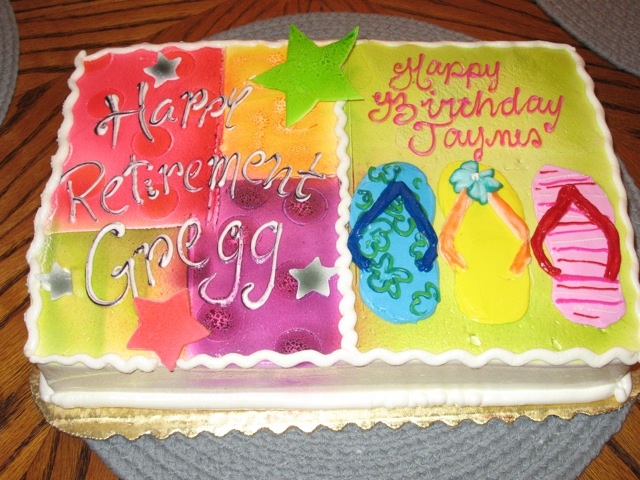
Greggs Birthday Cakes Birthday Cake Images For Girls Clip Art Pictures Pics With Name Ideas With Candles Love Designs

Greggs Birthday Cakes Biography

Source:- Google.com.pk
Greggs plc (LSE: GRG) is the largest bakery chain in the United Kingdom, with 1,671 outlets.It specialises in savoury products such as pasties, sausage rolls and sandwiches and sweet items including doughnuts and vanilla slices. It is headquartered in Newcastle upon Tyne and is listed on the London Stock Exchange.The first Greggs was opened in 1952. Originally growing regionally from its North East base, Greggs began to acquire other regional bakery chains across the rest of the country from the 1970s onwards. By the 1990s it was the largest bakery chain in the country, after acquiring its major rival, Bakers Oven.Greggs was founded by John Gregg as a Tyneside bakery in 1939.[4] It opened its first shop in Gosforth, Newcastle upon Tyne in 1951.When John died in 1964, the bakery was taken over by his son, Ian, assisted by his brother, Colin. Major expansion began soon after, including the acquisitions of other bakeries such as Glasgow-based Rutherglen in 1972, Leeds-based Thurston's in 1974, Broomfields the Bakers, London, Bowketts the Bakers in Kent, Tooks the Bakers (East Anglia) and Manchester-based Price's in 1976.
In 1994, the company acquired the Bakers Oven chain of bakers' shops from Allied Bakeries.
In 1999, Greggs rebranded its 100 Braggs bakers shops as Greggs of the Midlands and its Leeds-based Thurston chain as Greggs of Yorkshire.Starting in 2003, in an attempt to test the foreign market, Greggs opened a total of ten stores in Belgium; principally in Antwerp and Leuven. These have all since closed.On 9 December 2008, Greggs announced that all of its 165 Bakers Oven branded shops would be re-branded into the Greggs brand so that all the shops could benefit from the Greggs national advertising campaign. In March 2011, the company opened its 1,500th shop, in York.[3] In May 2012, the company began selling frozen pasties through the Iceland supermarket chain. In January 2013, Greggs replaced its CEO Ken McMeikan with Punch Taverns CEO Roger Whiteside. McMeikan left the firm for Brakes Group.The company has grown steadily over the years and now has over 1,600 outlets, with many town and city centres having several stores. In 2009, Greggs announced plans for another 600 stores, and has become bigger than fast food chain McDonalds, within the UK. It has a divisional structure with central bakeries around the country supplying the shops in their surrounding areas.As well as selling British freshly baked savouries such as sausage rolls and Cornish pasties, local items are also available. Traditional Tyneside and, more generally, North East foods are usually available, for example pease pudding and Stotties. The available products are frequently updated and change according to the time of year. For example at Hallowe'en various themed products are available.In 2011, the company could increase its sales by 5.8% (compared to 2010) and achieved sales of £701 million.In 2012 Greggs opened its first Greggs Moment, a 104-seater coffee shop in its home town of Newcastle, located on Northumberland Street. This store was shortly followed by one in the nearby MetroCentre and the Hill Street Shopping Centre, Middlesbrough.Actress and model Milla Jovovich, a fan of the store and its pasties, said in 2002 that she would be willing to become the "face of Greggs" in a new marketing campaign if the firm approached her, though no such approach was made. Jovovich's spouse Paul W S Anderson shares his Gosforth roots with Greggs and introduced Jovovich to the brand. The latest advertising slogan for Greggs is "The Home of Fresh Baking", and recently the face of Greggs has been British comedian Paddy McGuinness.When George Osborne announced in the 2012 Budget that he was going to ensure VAT was charged on pasties and other baked foods (as it is on other hot take-away food), Greggs participated in a campaign to reverse this decision. This became known as the Pasty Tax or Pasty Gate. Changes were announced to the proposals in May 2012 which permitted zero-rating provided the food simply retained the heat from baking while left to cool. However, this led to customers complaining about being served lukewarm food, and Greggs reverted to keeping the food hot, and therefore having to charge VAT.An 8-part documentary series called Greggs: More Than Meats The Pie, which goes behind the scenes of the bakery and all its areas, premiered on 29 April 2013, on Sky1 and Sky1 HD. The first episode achieved in excess of over 740,000 viewers with all ratings across Sky1, Sky1+1 and Sky2 factored in. Sky revealed the documentary programme was Sky1's number one original show in April with a final total of 1.27 million viewers. The second episode aired on 6 May 2013 and achieved over 681,000 viewers.The first episode featured several Greggs shops around the UK getting refitted and refurbished including the Low Fell shop. The second episode featured the girls at Low Fell doing the naked calendar shoot for Children in Need, as well as several shop workers doing a sponsored sea dip for the charity. Gavin Hetherington, a successful author who has worked with the company since July 2010, was featured in a cameo appearance while also doing the sea dip.
Greggs Birthday  Cakes Birthday Cake Images For Girls Clip Art Pictures Pics With Name Ideas With Candles Love Designs

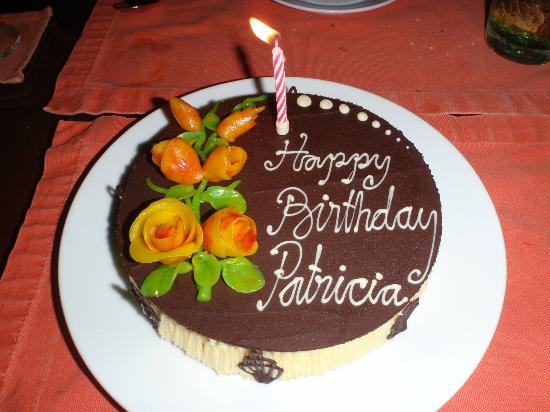
How To Make A Birthday Cake Birthday Cake Images For Girls Clip Art Pictures Pics With Name Ideas With Candles Love Designs

How To Make A Birthday Cake Biography

Source:- Google.com.pk
The birthday cake has been an integral part of the birthday celebrations in western European countries since the middle of the 19th century, which extended to Western culture.Certain rituals and traditions, such as singing of birthday songs, associated with birthday cakes are common to many Western cultures. The Western tradition of adding lit candles to the top of a birthday cake originates in 18th-century Germany. However, the intertwining of cakes and birthday celebrations stretch back to the Ancient Romans. The development of the birthday cake has followed the development of culinary and confectionery advancement. While throughout most of Western history, these elaborate cakes in general were the privilege of the wealthy, birthday cakes are nowadays common to most Western birthday celebrations. Around the world many variations on the birthday cake, or rather the birthday pastry or sweets, exist.This video provides step-by-step instructions for baking a basic yellow cake.Cakes are broadly divided into several categories, based primarily on ingredients and cooking techniques.Yeast cakes are the oldest and are very similar to yeast breads. Such cakes are often very traditional in form, and include such pastries as babka and stollen.Cheesecakes, despite their name, aren't really cakes at all. Cheesecakes are in fact custard pies, with a filling made mostly of some form of cheese (often cream cheese, mascarpone, ricotta or the like), and have very little flour added, although a flour-based or graham cracker crust may be used. Cheesecakes are also very old, with evidence of honey-sweetened cakes dating back to ancient Greece.Sponge cakes are thought to be the first of the non-yeast-based cakes and rely primarily on trapped air in a protein matrix (generally of beaten eggs) to provide leavening, sometimes with a bit of baking powder or other chemical leaven added as insurance. Such cakes include the Italian/Jewish pan di Spagna and the French Génoise. Highly decorated sponge cakes with lavish toppings are sometimes called gateau; the French word for cake.A large cake garnished with strawberriesButter cakes, including the pound cake and devil's food cake, rely on the combination of butter, eggs, and sometimes baking powder or bicarbonate of soda to provide both lift and a moist texture.Beyond these classifications, cakes can be classified based on their appropriate accompaniment (such as coffee cake) and contents (e.g. fruitcake or flourless chocolate cake).Some varieties of cake are widely available in the form of cake mixes, wherein some of the ingredients (usually flour, sugar, flavoring, baking powder, and sometimes some form of fat) are premixed, and the cook needs add only a few extra ingredients, usually eggs, water, and sometimes vegetable oil or butter. While the diversity of represented styles is limited, cake mixes do provide an easy and readily available homemade option for cooks who are not accomplished bakers.
Special-purpose cakesCake made for a baby shower and decorated with edible ingredients
Cakes may be classified according to the occasion for which they are intended. For example, wedding cakes, birthday cakes, cakes for first communion, Christmas cakes, Halloween cakes and Passover plava (a type of sponge cake sometimes made with matzo meal) are all identified primarily according to the celebration they are intended to accompany. The cutting of a wedding cake constitutes a social ceremony in some cultures. The Ancient Roman marriage ritual of confarreatio originated in the sharing of a cake.Particular types of cake may be associated with particular festivals, such as stollen or chocolate log (at Christmas), babka and simnel cake (at Easter), or mooncake. There has been a long tradition of decorating an iced cake at Christmas time; other cakes associated with Christmas include chocolate log and mince pies.Shapes Cakes are frequently described according to their physical form. Cakes may be small and intended for individual consumption. Larger cakes may be made with the intention of being sliced and served as part of a meal or social function. Common shapes include: Bundt cakes Cake balls Conical, such as the Kransekake Cupcakes and madeleines, which are both sized for a single person Layer cakes, frequently baked in a springform pan and decorated Sheet cakes, simple, flat, rectangular cakes baked in sheet pans Swiss rolls Cake flour A decorated birthday cake Main article: Flour Special cake flour with a high starch-to-gluten ratio is made from fine-textured, soft, low-protein wheat. It is strongly bleached, and compared to all-purpose flour, cake flour tends to result in cakes with a lighter, less dense texture.herefore, it is frequently specified or preferred in cakes meant to be soft, light, and or bright white, such as angel food cake. However, if cake flour is called for, a substitute can be made by replacing a small percentage of all-purpose flour with cornstarch or removing two tablespoons from each cup of all-purpose flour. Some recipes explicitly specify or permit all-purpose flour, notably where a firmer or denser cake texture is desired. Cake decoratingMain article: Cake decorating A chocolate cake decorated with icing, strawberries, and silvery sugar beads or Dragées. A slice of strawberry cake with garnishing of strawberry.Chocolate layer cake with chocolate frosting and shaved chocolate toppingA finished cake is often enhanced by covering it with icing, or frosting, and toppings such as sprinkles, which are also known as "jimmies" in certain parts of the United States and "hundreds and thousands" in the United Kingdom. Frosting is usually made from powdered (icing) sugar, sometimes a fat of some sort, milk or cream, and often flavorings such as vanilla extract or cocoa powder. Some decorators use a rolled fondant icing. Commercial bakeries tend to use lard for the fat, and often whip the lard to introduce air bubbles. This makes the icing light and spreadable. Home bakers either use lard, butter, margarine or some combination thereof. Sprinkles are small firm pieces of sugar and oils that are colored with food coloring. In the late 20th century, new cake decorating products became available to the public. These include several specialized sprinkles and even methods to print pictures and transfer the image onto a cake.Special tools are needed for more complex cake decorating, such as piping bags or syringes, and various piping tips. To use a piping bag or syringe, a piping tip is attached to the bag or syringe using a coupler. The bag or syringe is partially filled with icing which is sometimes colored. Using different piping tips and various techniques, a cake decorator can make many different designs. Basic decorating tips include open star, closed star, basketweave, round, drop flower, leaf, multi, petal, and specialty tips.Royal icing, marzipan (or a less sweet version, known as almond paste), fondant icing (also known as sugarpaste) and buttercream are used as covering icings and to create decorations. Floral sugarcraft or wired sugar flowers are an important part of cake decoration. Cakes for special occasions, such as wedding cakes, are traditionally rich fruit cakes or occasionally Madeira cakes, that are covered with marzipan and iced using royal icing or sugar-paste. They are finished with piped borders (made with royal icing) and adorned with a piped message, wired sugar flowers, hand-formed fondant flowers, marzipan fruit, piped flowers, or crystallized fruits or flowers such as grapes or violets.
How To Make A Birthday Cake Birthday Cake Images For Girls Clip Art Pictures Pics With Name Ideas With Candles Love Designs

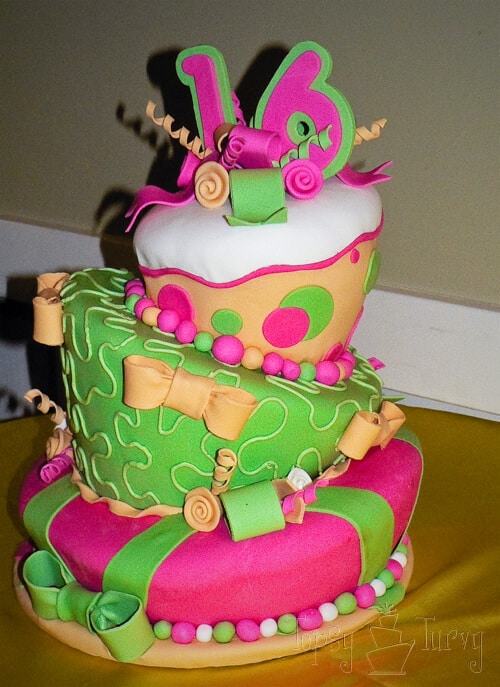
16th Birthday Cakes Birthday Cake Images For Girls Clip Art Pictures Pics With Name Ideas With Candles Love Designs

16th Birthday Cakes Birthday

Source:- Google.com.pk
Baumkuchen is a kind of layered cake. It is a traditional dessert in many countries throughout Europe and is also a popular snack and dessert in Japan. The characteristic rings that appear when sliced resemble tree rings, and give the cake its German name, Baumku chen, which literally translates to "tree cake".The origins of baumkuchen and where it was first baked are disputed. One theory is that baumkuchen was invented in the German town of Salzwedel, a story the town itself popularizes, and has been made there since at least the 19th century. Another theory suggests it began as a Hungarian wedding cake, which derives from the oldest Hungarian pastry kürtőskalács (chimney cake). In Ein neues Kochbuch (lit. "A New Cookbook"), the first cookbook written for professional chefs by Marx Rumpolt, there is a recipe for baumkuchen. This publication puts the origin of baumkuchen as far back as 1581, the year the cookbook was first published. Marx Rumpolt had previously worked as a chef in Hungary and Bohemia. In 1682, a rural medic working for Johann Sigismund Elsholtz prepared a similar dish.Aside from its more recent history, baumkuchen can trace its roots back to Ancient Greece and then Rome, with the Romans bringing the recipe for baking cakes on logs over an open fire to modern day Germany and the surrounding regions with their conquest of Northern Europe.Baumkuchen baked on a spit Traditionally, baumkuchen is made on a spit by brushing on even layers of batter and then rotating the spit around a heat source. Each layer is allowed to brown before a new layer of batter is poured. When the cake is removed and sliced, each layer is divided from the next by a golden line, resembling the growth rings on a crosscut tree. A typical baumkuchen is made up of 15 to 20 layers of batter. However, the layering process for making baumkuchen can continue until the cakes are quite large. Skilled pastry chefs have been known to create cakes with 25 layers and weighing over 100 pounds. When cooked on a spit, it is not uncommon for a finished baumkuchen to be 3 to 4 feet tall.Baumkuchen ingredients are typically butter, eggs, sugar, vanilla, salt, and flour. Baking powder is not considered a traditional ingredient. The ratio of flour, butter and eggs is typically 1:1:2 respectively (i.e., 100 grams of flour, 100 grams of butter, and 200 grams of eggs). The recipe can be varied by adding other ingredients, such as ground nuts, honey, marzipan, nougat and rum or brandy, to the batter or filling. Additionally, baumkuchen may be covered with sugar or chocolate glaze. With some recipes, the fully baked and cooled baumkuchen is first coated with marmalade or jam, and then covered with chocolate.German Baumkuchenspitzen Baumkuchenspitzen, German for "tree cake points", are miniature versions of baumkuchen that are created from the cake when it is cut in slices and then into pieces that are referred to as "Spitzen". These pieces are typically coated in chocolate and sold individually.A simpler horizontally layered version of the cake called a "Schichttorte" also exists. It is baked without a spit and thus does not have circular rings but horizontal layers. The horizontally layered version results in a baumkuchen that is more like a conventional cake in shape. It can also be baked in a conventional household oven that has a broiler inside, whereas the traditional spit version requires special equipment normally not available in an average household. However, unlike the spit variant, the Schichttorte cross section is less reminiscent of tree rings.Japanese baumkuchen.Baumkuchen is one of the most popular pastries in Japan, where it is called baumukūhen  is a popular return present in Japan for wedding guests because of its typical ring shape.It was first introduced to Japan by the German Karl Joseph Wilhelm Juchheim. Juchheim was in the Chinese city of Tsingtao during World War I when Britain and Japan laid siege to Tsingtao. He and his wife were then interned at Okinawa. Juchheim started making and selling the traditional confection at a German exhibition in Hiroshima in 1919. After the war, he chose to remain in Japan. Continued success allowed him to move to Yokohama and open a bakery, but its destruction in the 1923 Great Kantō earthquake caused him to move his operations to Kobe, where he stayed until the end of World War II. Some years later, his wife returned to help a Japanese company open a chain of bakeries under the Juchheim name that further helped spread baumkuchen's popularity in Japan.Pandan cake is a light, fluffy cake of Malay origins (Singapore, Indonesia, Malaysia) flavoured with the juice of Pandanus amaryllifolius leaves. The cakes are light green in tone due to the chlorophyll in the leaf juice. It also sometimes contains green food colouring to further enhance its colour. The cakes are sometimes not made with the leaf juice but instead simply flavoured with Pandanus extract, in which case colouring is added if a green colour is desired It is popular in Indonesia, Malaysia, Philippines, Singapore, Vietnam, Laos, Thailand, Hong Kong and China. It is also known as pandan chiffon.
16th Birthday Cakes Birthday Cake Images For Girls Clip Art Pictures Pics With Name Ideas With Candles Love Designs